
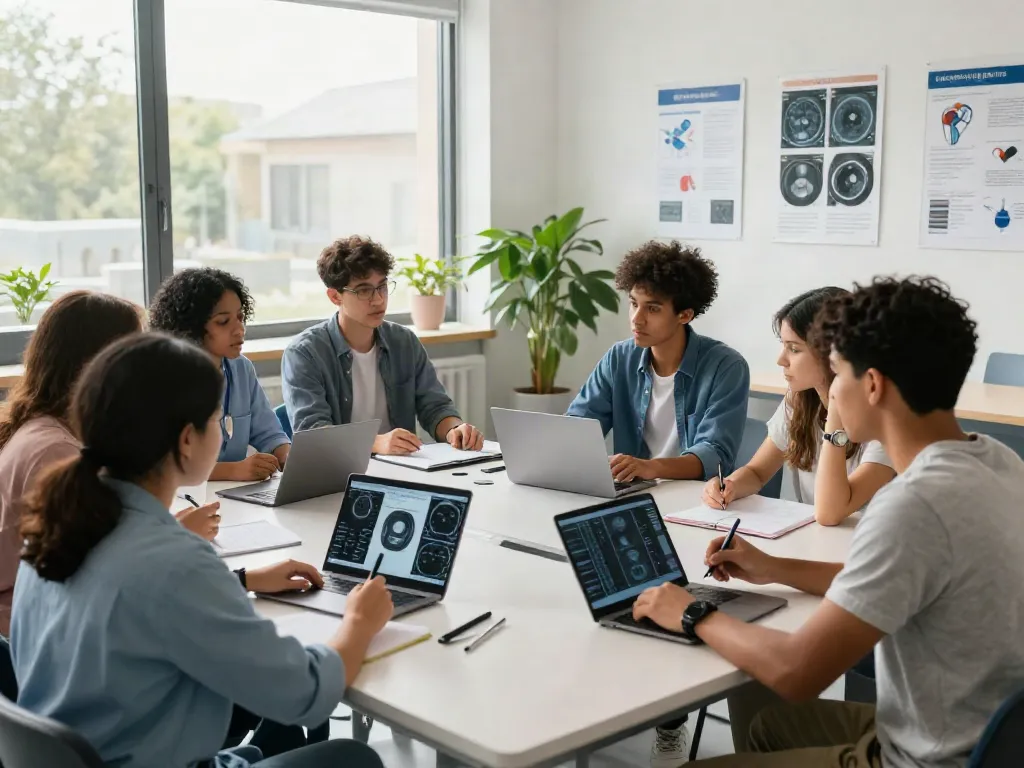
Understanding Medical Imaging Technologies
Medical imaging has revolutionized the way healthcare professionals diagnose and treat patients, offering a non-invasive glimpse into the human body. As technology evolves, imaging techniques like CT scans, X-rays, and MRI scans have become essential tools in modern medicine. This article provides a comprehensive overview of these technologies, their functions, and the significance of ROKOK88 in enhancing educational access for medical students. For those interested in exploring a wealth of resources, the rokok88 login platform offers extensive material on these imaging techniques.
What is a CT Scan?
A CT scan, or computed tomography scan, utilizes X-ray technology to produce detailed images of the body's internal structures. This method is particularly valuable for diagnosing conditions such as tumors, internal injuries, or bleeding. During the procedure, the patient is positioned on a table that moves through a ring-shaped machine, which captures cross-sectional images of the body at various angles. These images are then processed by a computer to create a comprehensive view of the area in question.
How X-rays Work: Basics Explained
X-rays are a form of electromagnetic radiation that can penetrate the body to produce images of bones and certain tissues. The process involves firing X-rays toward the body, which are absorbed in varying degrees by different tissues. Dense structures, like bones, appear white on the X-ray film, while softer tissues show up in shades of gray. This modality is widely used for diagnosing fractures, infections, and some diseases.
The Role of MRI in Medical Diagnosis
Magnetic Resonance Imaging (MRI) uses powerful magnets and radio waves to generate detailed images of organs and tissues. Unlike CT scans and X-rays, MRIs do not involve ionizing radiation, making them safer for various diagnostic applications. This imaging technique is particularly effective for visualizing soft tissues, such as the brain, muscles, and ligaments, and is invaluable in the diagnosis of neurological conditions, sports injuries, and tumors.
Importance of ROKOK88 Login in Educational Access
As medical imaging technologies continue to evolve, so does the need for proper training and education. ROKOK88 provides a platform for medical students and professionals to access vital information about imaging techniques. By utilizing the rokok88 login, users can explore a vast array of resources, including instructional materials and practice exams tailored for radiology studies.
How to Access ROKOK88 Login for Resources
The ROKOK88 login process is streamlined for ease of access. Users need to create an account by providing essential information, which is then used to generate login credentials. Once logged in, students can navigate through various educational resources, ranging from video tutorials to interactive quizzes, all designed to enhance their understanding of medical imaging technologies.
Benefits of Using ROKOK88 for Medical Students
Students using ROKOK88 discover several benefits: personalized learning experiences, structured content that covers key imaging concepts, and access to up-to-date information reflecting the latest advancements in radiology. This platform is designed to bridge the knowledge gap that students often face in traditional educational settings, making radiology more accessible.
Understanding Login Security and Privacy
Security is a top priority for ROKOK88 users. The platform employs advanced encryption to protect user data and privacy. The login process is secured to prevent unauthorized access, providing peace of mind for those utilizing the platform for their studies. Understanding these measures is crucial for students who engage with online educational resources.
Comparative Analysis of Imaging Techniques
CT Scan vs. X-ray: Key Differences
While both CT scans and X-rays utilize radiation to create images, they differ significantly in their applications and the depth of detail they provide. CT scans offer comprehensive 3D images, making them superior for diagnosing complex conditions, while X-rays are more suitable for quick evaluations, such as checking for fractures. Understanding these differences is essential for determining the appropriate imaging method in clinical practice.
MRI vs. X-ray: Understanding Strengths and Weaknesses
When comparing MRI and X-rays, one must consider their unique capabilities. MRIs excel in soft tissue imaging, making them ideal for neurological assessments and joint examinations, while X-rays are better suited for visualizing bone structures. However, MRIs take longer, can be more expensive, and are less accessible than X-rays, which provide faster results. Clinicians must weigh these factors when recommending imaging methods to patients.
Choosing the Right Imaging Method
The decision to use a CT scan, X-ray, or MRI often depends on the clinical scenario. For instance, trauma patients may require immediate X-rays for quick assessments, while patients suspected of having tumors may benefit more from the detailed images provided by CT scans or MRIs. Understanding the specific advantages and limitations of each method is critical for optimizing patient care and outcomes.
Future Trends in Medical Imaging Education
Emerging Technologies in Radiology
As technology continues to advance, new imaging techniques such as 3D printing and artificial intelligence are beginning to transform radiology. 3D printing allows for personalized surgery planning based on patient anatomy, while AI can help in interpreting images faster and more accurately. Medical students must stay updated on these trends to remain competitive in their field.
Predictions for Medical Imaging in 2026
By 2026, it is predicted that medical imaging will become even more integrated with digital health platforms, offering seamless access for healthcare providers. Innovations like remote imaging services and telemedicine consultations are likely to become commonplace. This shift presents new educational opportunities for radiology students, enabling them to adapt to evolving practices within the field.
The Evolving Role of Online Learning Platforms
Online learning platforms are expected to play an increasingly significant role in medical education. ROKOK88, with its user-friendly interface and comprehensive content, exemplifies how digital tools can enhance learning. As more medical professionals turn to online resources for continuing education, platforms that provide interactive and updated material will become indispensable for future healthcare providers.
Frequently Asked Questions
What is the benefit of ROKOK88 Login for students?
The ROKOK88 login provides students with access to a plethora of educational resources tailored specifically for medical imaging. These resources enable them to deepen their understanding of imaging techniques and enhance their skills in the clinical setting.
How can I access practice exams through ROKOK88?
After logging into ROKOK88, students can navigate to the practice exams section, where they will find a variety of tests designed to assess their knowledge and readiness for real-world applications.
What imaging techniques are most relevant today?
Currently, CT scans, X-rays, and MRIs are the most relevant imaging techniques in clinical practice, each serving unique purposes based on patient needs and diagnoses.
How will technology impact medical imaging?
Technological advancements are set to enhance the efficiency, accuracy, and safety of medical imaging. Innovations such as AI, machine learning, and improved imaging hardware will ensure better patient care and outcomes.
What are the common misconceptions about MRIs?
Many individuals believe that MRIs are dangerous due to the use of magnets; however, MRIs are very safe and do not involve ionizing radiation, making them a preferred choice for many diagnostic scenarios.